

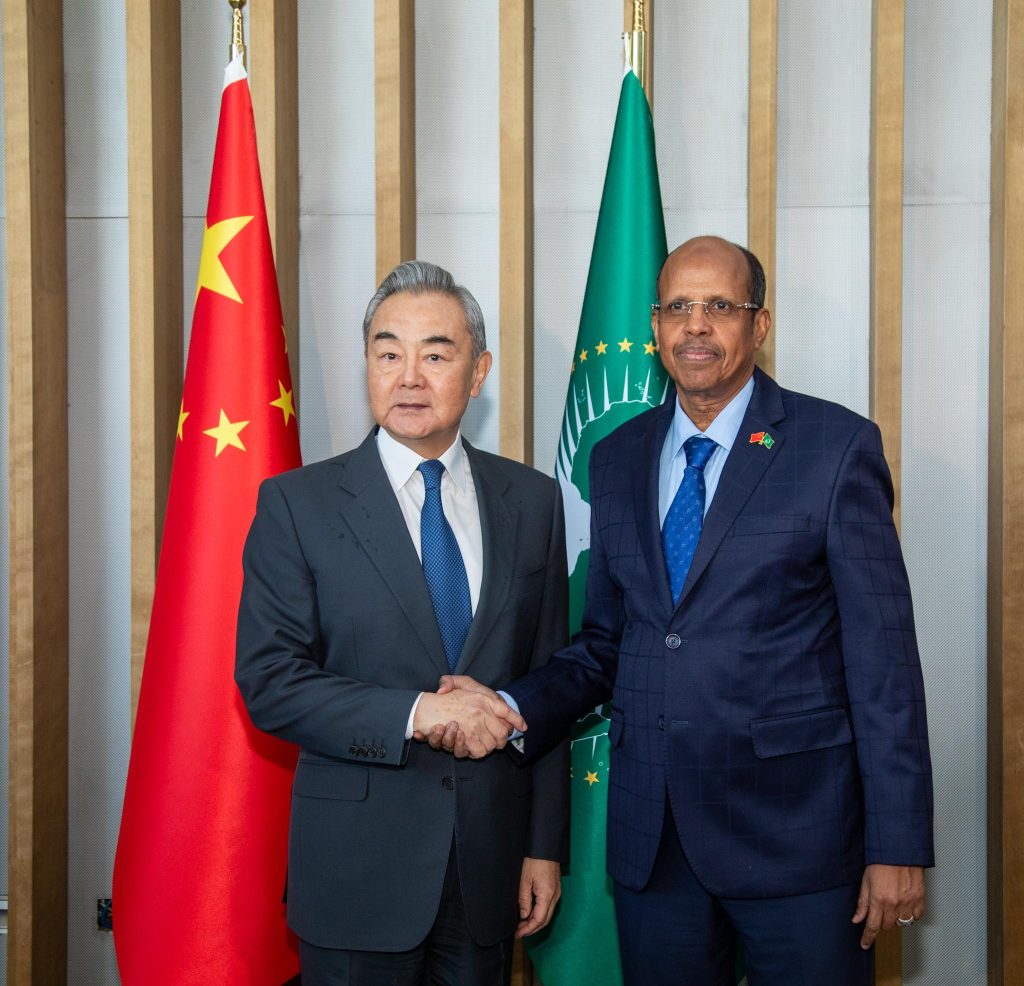
China and the African Union (AU) have reaffirmed their strategic partnership, highlighting East Africa as a key region for peace, development, and trade integration during the 9th China–AU Strategic Dialogue in Addis Ababa. The talks, attended by Chinese Foreign Minister Wang Yi and AU Commission Chairperson Mahmoud Ali Youssouf, coincided with the launch of the 2026 China–Africa Year of People-to-People Exchanges, designed to deepen cultural, educational, and economic ties between China and African nations.
Officials discussed joint efforts to support modernization, regional stability, and economic growth, with East Africa identified as a focal point for initiatives such as the African Continental Free Trade Area (AfCFTA) and infrastructure development projects. Both sides emphasized coordination between China’s 15th Five-Year Plan and the AU’s Agenda 2063, aiming to accelerate development in key East African countries while enhancing trade, connectivity, and industrialization.
Security and peacebuilding were central to the discussions, particularly concerning the Horn of Africa, where ongoing conflicts and political instability continue to affect the region. China and the AU agreed to strengthen cooperation under the International Organization for Mediation and the AU’s flagship project “Silencing the Guns by 2030”, highlighting East Africa’s role in broader continental stability efforts.
The AU reiterated its support for the One-China principle, while both sides stressed the importance of sovereignty, territorial integrity, and adherence to international law. They also expressed concern over crises outside the continent, such as developments in Venezuela, framing East Africa’s stability as part of a global commitment to peace and governance.
The dialogue also focused on practical cooperation, including infrastructure, digital economy, energy, education, and tourism, with East African nations expected to benefit from increased investment and technical collaboration. Observers note that these initiatives could enhance regional integration, boost trade, and provide economic opportunities for East African populations, while reinforcing the continent’s role in global supply chains.
Analysts say the strengthened China–AU partnership positions East Africa as a strategic hub for investment, peacebuilding, and development, reflecting Beijing’s growing influence in the region and the AU’s priorities for sustainable growth and stability.