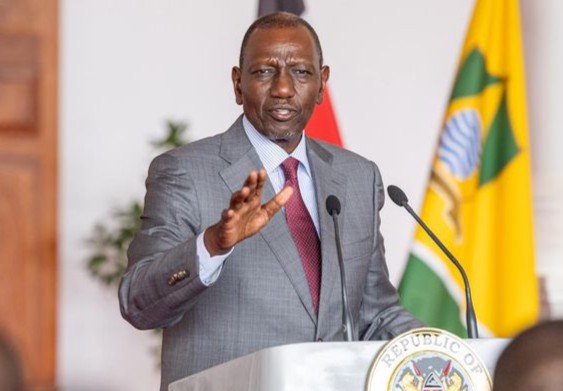
When William Ruto declares that the African Union is “not fit for purpose,” it is not mere rhetoric; it is a warning Africa cannot ignore.
Speaking at the Mashariki Cooperation Conference in Diani, Ruto delivered one of the most candid assessments yet from a sitting African leader about the state of the continent’s premier institution. His message was clear: Africa’s ambitions are outpacing the capacity of the very body meant to coordinate them.
For a continent on the brink of historic transformation projected to become the world’s largest market and home to a quarter of the global population, the stakes could not be higher. Yet the AU, in its current form, continues to struggle with the same persistent challenges: slow decision-making, weak enforcement mechanisms, limited financial independence, and an inability to respond swiftly to crises.
This is the “critical gap” Ruto alluded to, the widening disconnect between Africa’s potential and its institutional readiness.
The truth is uncomfortable but necessary: Africa cannot unlock its future with a 20th-century institutional framework. Whether it is managing conflicts, accelerating trade under the African Continental Free Trade Area, or positioning the continent in an increasingly competitive global order, the AU must evolve, or risk becoming irrelevant.
Ruto’s call to involve intelligence leaders in shaping a new framework may raise eyebrows, but it underscores a deeper point: reform cannot be cosmetic. It must be strategic, data-driven, and grounded in the realities of modern geopolitics and security.
This is not the first time reform has been on the table. Under Paul Kagame, the AU embarked on an ambitious reform agenda aimed at streamlining operations, improving financing, and enhancing accountability. While progress was made, implementation has been uneven, and political will has often fallen short.
That is precisely where the problem lies.
The AU does not lack ideas; it lacks urgency and collective commitment. Member states have repeatedly endorsed reforms, only to retreat into national interests when it comes time to implement them. The result is an institution that aspires to lead but often reacts.
Ruto’s assignment by fellow heads of state to spearhead reform efforts could mark a turning point, but only if it is backed by genuine political will across the continent. Reforming the AU is not a one-man mission; it is a collective responsibility.
Africa stands at a crossroads. Its demographic boom can either be a dividend or a disaster. Its vast resources can either drive prosperity or fuel instability. Its voice on the global stage can either grow stronger or remain fragmented.
The difference will depend, in large part, on whether the African Union can transform itself into an agile, effective, and forward-looking institution.
The question is no longer whether reform is needed. That debate is settled.
The real question is whether African leaders are finally ready to act.