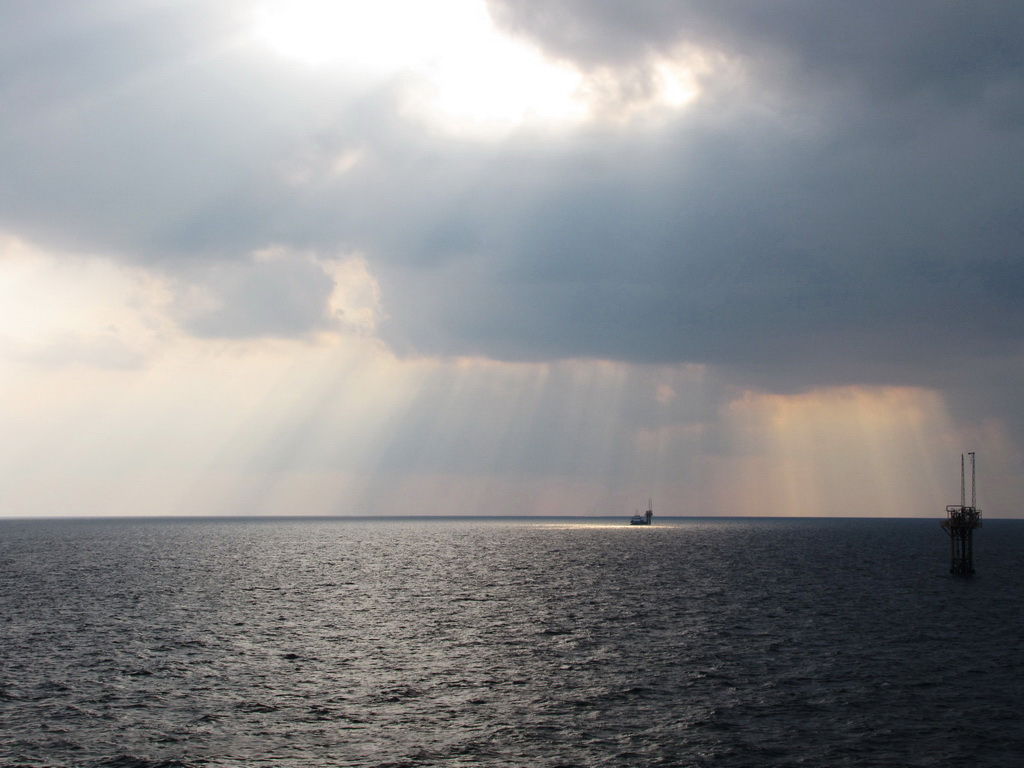
Shipping risks in a key global oil route could quietly drive up costs across East Africa
A Distant Flashpoint With Local Consequences
Nairobi, Kenya — Far from the daily rhythm of Nairobi’s streets and Mombasa’s port traffic, a narrow stretch of water between the Persian Gulf and the open sea is once again stirring anxiety in global markets. The Strait of Hormuz—through which roughly a fifth of the world’s oil supply flows—has become the latest flashpoint, and while it may seem distant, its tremors have a habit of arriving in Kenya with unsettling speed.
Reassurance—and a Warning
In a statement issued from its embassy in Nairobi, Iran sought to project both reassurance and resolve. Maritime traffic through the strait, it said, remains open. Yet in the same breath, it described the situation as “highly unsafe, volatile, and unpredictable,” warning that vessels associated with what it termed “aggressors,” particularly the United States and Israel, may not be treated as neutral. It is the kind of language that rarely disrupts ships overnight but often unsettles markets immediately.
How the Shock Travels to Kenya
For Kenya, the concern is less about naval movements and more about arithmetic. The country’s fuel supply is deeply tied to global oil flows, much of which passes through or is priced against conditions in Hormuz. When tensions rise there, oil traders react swiftly, insurers adjust their risk calculations, and shipping costs begin to inch upward. By the time the ripple reaches the Port of Mombasa, it has already gathered weight.
From Global Tension to Pump Prices
The consequences tend to surface quietly but decisively. Kenya’s fuel pricing, regulated through monthly reviews by the Energy and Petroleum Regulatory Authority, reflects international market shifts with a lag. What begins as a geopolitical signal in late March can translate into higher pump prices in April or May. And because fuel sits at the heart of nearly every sector—from transport and food distribution to manufacturing—any increase rarely remains confined to petrol stations. It spreads, almost invisibly, into the cost of living.
Markets Move on Fear, Not Just Facts
What makes the current moment particularly delicate is that no formal disruption has occurred. Ships are still moving, and the strait has not been closed. But markets are not governed by events alone; they are driven just as much by anticipation. The suggestion that certain vessels may face different treatment, or that the rules of passage are shifting, is often enough to trigger price adjustments long before any physical blockade takes shape.
A Familiar Pattern
This is not unfamiliar territory. Past tensions in the Gulf have shown that oil prices can spike on perception alone, with downstream economies like Kenya absorbing the impact weeks later. The pattern is almost predictable: a rise in crude benchmarks, higher freight and insurance premiums, and eventually a recalibration of local fuel prices. By then, the origin of the increase is often forgotten, even as its effects are felt in bus fares, food prices, and household budgets.
A Narrow Strait, a Wide Impact
Iran’s message, carefully worded yet unmistakably firm, appears designed to walk that line between reassurance and deterrence. The strait remains open, but the conditions of passage are no longer entirely neutral. For global markets, that ambiguity is enough to raise caution. For Kenya, it is a reminder of how closely its economic stability is tied to forces far beyond its borders.
For now, there is no immediate crisis. But if history is any guide, it does not take a closure of Hormuz to tighten the pressure. Sometimes, a shift in tone is all it takes for the cost of living to begin its slow, familiar climb.