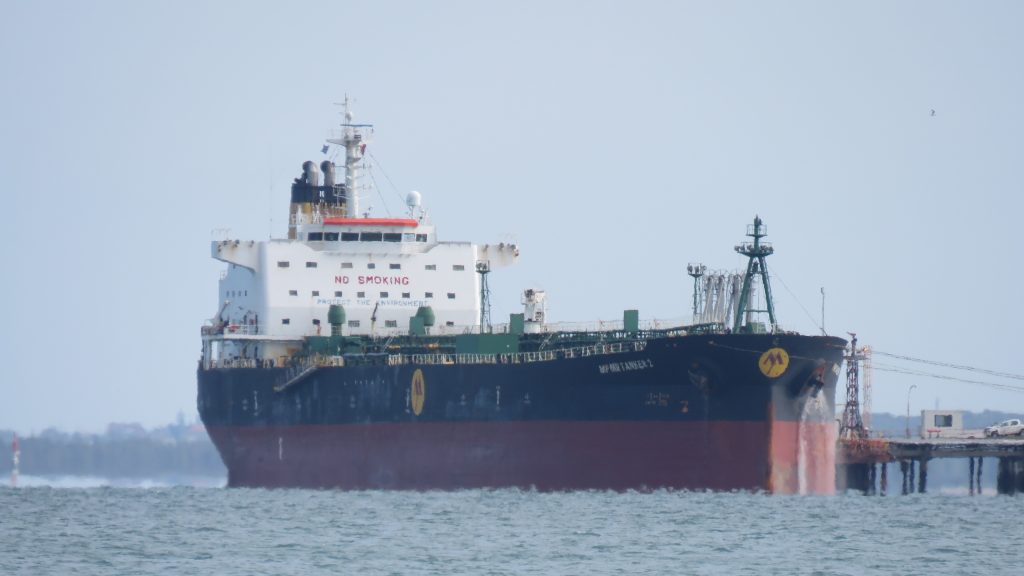
When drivers pull into a fuel station and glance at the price per litre, few imagine that the number blinking on the pump may have been influenced by tensions unfolding thousands of kilometers away in the Persian Gulf. Yet one of the most powerful forces shaping global fuel prices lies in a narrow stretch of water between Iran and Oman known as the Strait of Hormuz.
Barely 33 kilometers wide at its narrowest point, the strait has become one of the most important arteries of the global economy. Tankers carrying crude oil and liquefied natural gas pass through it every hour, feeding energy-hungry economies from Asia to Europe and Africa. When tensions rise there, markets around the world react almost instantly. And those reactions, sooner or later, reach the everyday consumer standing beside a fuel pump.
The Strait of Hormuz is therefore more than a distant geopolitical flashpoint. It is a critical junction in the modern energy system, where geography, global politics, and household economics intersect.
A Chokepoint for the World’s Energy
Energy analysts often refer to the Strait of Hormuz as the world’s most important “oil chokepoint.” The term describes narrow maritime passages where large volumes of trade must pass through constrained geography. Few chokepoints carry as much economic weight.
According to data from the U.S. Energy Information Administration, roughly 20 to 21 million barrels of oil move through the strait every day. Global oil consumption currently sits at about 100 million barrels per day, meaning that roughly one-fifth of the world’s oil supply traded by sea passes through this single waterway.
The strait also plays a crucial role in the global natural gas market. Qatar, one of the world’s largest exporters of liquefied natural gas, ships almost all of its LNG through this corridor. As a result, the waterway carries approximately 20 percent of global LNG trade.
The energy that passes through the strait originates largely from the Gulf’s major producers: Saudi Arabia, Iraq, Kuwait, the United Arab Emirates, Qatar, and Iran. Oil tankers departing from ports in these countries must navigate through the narrow shipping lanes of the Strait of Hormuz before reaching international waters and heading toward global markets.
For energy-importing countries, especially in Asia, the strait functions as a vital economic lifeline. China, India, Japan, and South Korea collectively receive the majority of oil transported through Hormuz. Analysts estimate that between 70 and 80 percent of oil flowing through the strait is destined for Asian markets.
But while Asia may be the primary destination, the economic consequences of disruptions in Hormuz are felt worldwide.
From Gulf Waters to the Fuel Pump
The connection between the Strait of Hormuz and the price of fuel in cities across the world lies in the structure of global oil markets. Crude oil is traded internationally through benchmark pricing systems such as Brent crude, which serves as a reference price for much of the world’s oil.
When geopolitical tensions threaten oil supply routes, traders quickly adjust prices based on anticipated risks. Even the possibility that shipments might be delayed or disrupted can drive markets upward.
The chain reaction is predictable. If instability in the Strait of Hormuz raises concerns about supply, oil traders begin buying contracts at higher prices. Refiners must then pay more for crude oil. Those higher costs move through the supply chain, eventually reaching distributors and retailers.
Within weeks – and sometimes days – motorists see the effects reflected in the price of petrol or diesel at fuel stations.
For economies heavily dependent on imported energy, this ripple effect can be significant. Higher oil prices increase transportation costs, raise the price of goods, and contribute to broader inflation. In this way, developments in a distant maritime corridor can shape economic conditions in countries far removed from the Persian Gulf.
A History of Volatility
The Strait of Hormuz has long been a focal point of geopolitical tension, and history provides numerous examples of how instability there can unsettle global markets.
One of the most dramatic periods occurred during the later years of the Iran-Iraq War in the 1980s. In what became known as the “Tanker War,” both countries targeted oil shipments passing through the Gulf in an effort to undermine each other’s economic lifelines. Between 1984 and 1988, more than 400 commercial vessels were attacked in the region.
The escalating threats prompted the United States and other powers to escort tankers through the strait, while insurance premiums for shipping surged. Oil markets became increasingly volatile as traders feared that vital supply routes could be interrupted.
More recently, tensions surrounding Iran’s nuclear program have repeatedly brought the strait back into focus. In 2011 and 2012, as Western governments imposed sanctions on Iran, Iranian officials warned that the country could block the waterway in retaliation. Although the strait was never closed, oil prices climbed above $120 per barrel, reflecting the market’s sensitivity to potential disruption.
Similar reactions occurred in 2019 when several oil tankers were attacked near the strait amid heightened tensions between Iran and the United States. Oil prices rose sharply as investors weighed the possibility that shipping through the region might become more dangerous.
Each of these episodes illustrates the same underlying reality: even the perception of instability in the Strait of Hormuz can reverberate through global energy markets.
Why the Strait Cannot Easily Be Bypassed
Given the strategic vulnerability of relying on a single maritime passage, Gulf states have attempted to develop alternative routes for their exports. Saudi Arabia, for example, operates a pipeline that transports oil across the kingdom to ports on the Red Sea. The United Arab Emirates has constructed a pipeline linking its oil fields to the port of Fujairah, located outside the Persian Gulf.
These projects reduce some dependence on the Strait of Hormuz, but they do not eliminate it. Combined, the pipelines can bypass only about six to seven million barrels of oil per day – far less than the more than 20 million barrels that normally transit the strait.
The majority of Gulf energy exports still have no practical alternative route to reach global markets. For that reason, any prolonged disruption in the strait would create immediate shortages in international supply.
This structural dependence explains why the waterway remains under close military observation. The United States Navy’s Fifth Fleet, based in Bahrain, maintains a significant presence in the region, alongside naval forces from allied countries. Their mission includes ensuring freedom of navigation through one of the world’s most vital shipping corridors.
The Economic Ripple Effect
While policymakers often view the Strait of Hormuz through the lens of security and geopolitics, its consequences are ultimately economic. Oil remains the world’s most widely traded commodity, and energy prices influence almost every sector of modern economies.
Transportation systems, manufacturing industries, agriculture, and aviation all depend heavily on fuel. When oil prices rise due to tensions in the Gulf, businesses face higher operating costs. Those costs often filter through to consumers in the form of increased prices for goods and services.
For developing economies, the impact can be particularly pronounced. Many countries import the majority of their fuel, making them highly sensitive to fluctuations in global oil markets. A sudden increase in oil prices can strain government budgets, widen trade deficits, and place pressure on national currencies.
Even countries with diversified energy sources cannot fully escape the effects. Because oil is traded in a global marketplace, supply disruptions in one region tend to push prices upward everywhere.
Geography Still Shapes the Global Economy
In an era defined by digital connectivity and complex financial systems, it is easy to assume that geography has lost its influence over global commerce. The Strait of Hormuz demonstrates the opposite. Physical corridors still matter enormously.
A narrow maritime passage less than 40 kilometers wide now carries a substantial share of the energy that powers the global economy. Its importance stems not from its size but from the concentration of resources and infrastructure that depend upon it.
As long as the world continues to rely heavily on oil and natural gas, the Strait of Hormuz will remain one of the most strategically significant locations on the planet.
For policymakers, investors, and ordinary citizens alike, the lesson is clear: the global economy remains interconnected in ways that can be both powerful and fragile.
Why the World Watches Hormuz
When news breaks about tensions in the Persian Gulf, analysts and traders immediately begin watching the Strait of Hormuz. They understand that disruptions there can ripple outward through shipping routes, energy markets, and national economies.
The driver filling a car in Nairobi, London, or Mumbai may not see the tankers passing through the strait. Yet the price displayed on the fuel pump often reflects events unfolding in that distant corridor.
In that sense, the Strait of Hormuz serves as a reminder of how deeply interconnected the modern world has become. A narrow stretch of water in the Middle East can influence household budgets, national inflation rates, and global economic stability.
And every time motorists pause to refuel, they are, in a small way, witnessing the global consequences of geography.