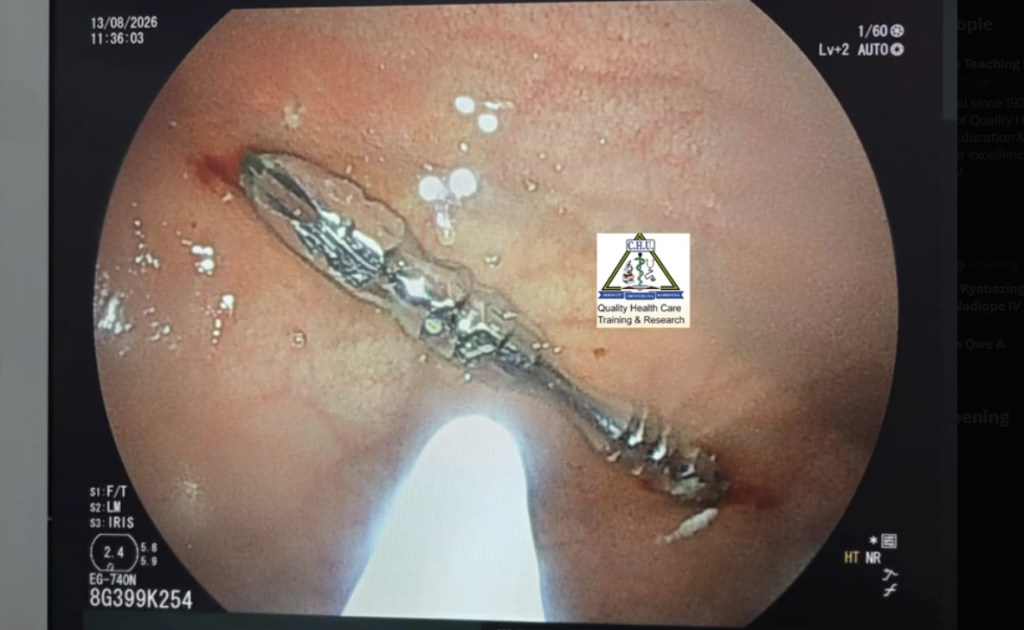
Doctors at the University Teaching Hospital of Kigali (CHUK) have successfully removed a piece of a screwdriver from the stomach of a five-month-old baby, avoiding the need for potentially more invasive open surgery.
The procedure was led by Dr. Gaspard Habimana, a pediatric gastroenterologist, and the CHUK endoscopy team.
The case highlights the growing use of specialized endoscopic procedures in Rwanda to manage gastrointestinal emergencies, particularly in children. Endoscopy allows doctors to access the digestive tract through natural openings, potentially avoiding an external surgical incision in carefully selected cases.
The latest procedure adds to previous complex cases managed at CHUK.
In a documented case published in the Rwanda Medical Journal, doctors successfully removed a large tablespoon that had remained in the stomach of a 27-year-old patient for four days. The object was retrieved using a polypectomy snare, and the patient experienced no post-procedure complications.
Dr. Habimana is Rwanda’s first physician specifically trained in pediatric gastroenterology and performs procedures including diagnostic upper gastrointestinal endoscopy, colonoscopy and polypectomy.
Foreign-body ingestion is a recognized pediatric emergency because objects can become lodged in the oesophagus, stomach or intestines and, depending on their shape and location, can cause obstruction, perforation or other complications.
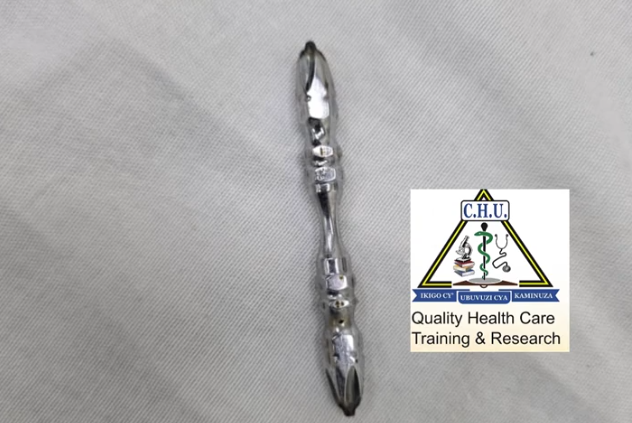
The development of endoscopic expertise provides doctors with another treatment option in cases where an object can be safely retrieved without conventional surgery.
For CHUK, the latest case illustrates the expanding capacity for specialized gastrointestinal care in Rwanda and the role of locally trained specialists in managing increasingly complex procedures.
The hospital’s pediatric and surgical departments provide specialized care to patients referred from across the country, while its surgical department operates multiple theatres for emergency and non-emergency procedures.