President Bola Ahmed Tinubu has directed the development of a roadmap for the full launch of Nigeria’s Digital Free Zones initiative, as the government seeks to make it easier for technology and service companies to raise international capital and scale their operations without moving their businesses or intellectual property abroad.
Tinubu has tasked Trade and Investment Minister Jumoke Oduwole, who serves as Vice-Chairman and Implementation Coordinator of the Presidential Steering Committee on Digital Free Zones, with working alongside the Itana Innovation project and other stakeholders to develop the roadmap within 180 days.
The initiative is intended to modernise Nigeria’s free-zone framework, which was established more than three decades ago, for the requirements of the digital economy.
The government says the programme is designed to encourage more Nigerian technology companies to incorporate, operate and expand from within the country while serving customers in African and international markets.
“Nigeria has the talent, enterprise and ambition to build companies that can compete anywhere in the world,” Tinubu said. “Our responsibility as a government is to ensure that Nigerians do not have to leave Nigeria or rely on other jurisdictions to realise that potential.”
The President said the government wants a greater share of the economic value generated by Nigerian talent to remain in the country through employment, investment, professional services, intellectual property and the growth of locally headquartered companies.
Itana at the Centre of the Initiative
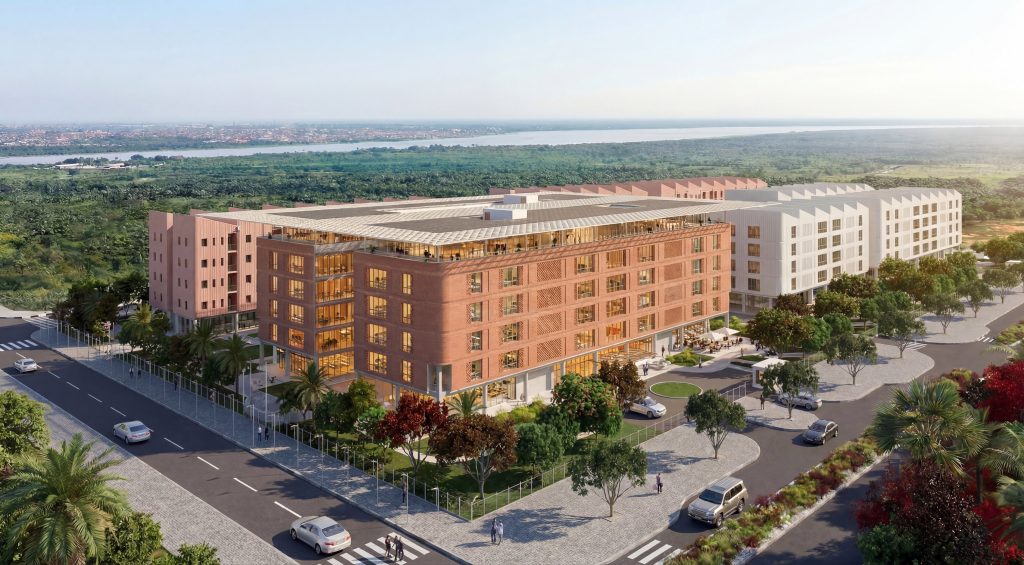
The programme is already taking shape through Itana, Nigeria’s first licensed digital economic zone management company. Itana was licensed by the Nigeria Export Processing Zones Authority (NEPZA) and is developing a digital economic zone in Lagos for technology, finance and service-based companies.
Itana and the Africa Finance Corporation (AFC) agreed in 2024 to develop the digital economic zone, with the project planned for Alaro City in Lagos. AFC said the first phase of the project was budgeted at about $100 million, including an eco-friendly technology campus and support for startups through Itana’s accelerator programme.
The broader initiative is designed to combine a digital business environment with infrastructure, access to capital and services intended to help African companies establish and scale their operations.
Tinubu said the ambition extends beyond creating technology parks, with the government seeking to enable companies to be incorporated, financed and governed in Nigeria while serving markets across Africa and beyond.
Jobs and Digital Services
The government also expects the initiative to expand opportunities for Nigerians to work remotely for global companies without relocating abroad.
Tinubu said young Nigerians in cities including Kano, Enugu, Warri, Minna, Maiduguri and Ibadan should be able to participate in the global digital economy from within the country.
The policy could also create additional demand for domestic professional services, including engineering, software development, design, legal services, accounting and financial services as digital businesses expand.
Nigeria’s government has increasingly positioned digital infrastructure, technology and entrepreneurship as part of its broader economic reform agenda. In May, Tinubu said digital infrastructure was essential to commerce, education, innovation and national productivity.
The initiative will require coordination across several areas, including regulation, taxation, banking, immigration, arbitration and the digitisation of government processes within free zones.
Regional Digital Economy
The government also sees the Digital Free Zones as a way to position Nigeria to benefit from the expansion of Africa’s digital economy and digitally enabled trade under the African Continental Free Trade Area (AfCFTA).
Nigeria is already home to technology companies such as Flutterwave, Moniepoint and Andela, which have expanded their services beyond the domestic market. The Nigerian government has cited such companies as examples of indigenous businesses capable of developing into international brands.
The Digital Free Zones initiative is therefore aimed at creating a regulatory and business environment in which more companies can grow internationally while maintaining their headquarters, intellectual property and a larger share of their economic activity in Nigeria.
The success of the programme will ultimately depend on the implementation of the proposed reforms and whether they translate into new businesses, investment, jobs and increased participation by Nigerian companies in global digital markets.